Most employee engagement activities don’t fail because they’re bad ideas.
They fail because they feel forgettable.
Another survey. Another session. Another initiative employees are expected to join. Over time, even the best-intentioned efforts blend into the background, not because they lack value, but because they lack involvement.
That’s where the shift is happening.
Not in what organizations do, but in how they deliver those experiences. Employees today expect constant interaction: tapping, reacting, choosing, responding. When workplace engagement feels static by comparison, it creates a gap.
Gamification is starting to close that gap. It doesn’t replace engagement strategies. It makes them more interactive, more responsive, and easier to join.
From Passive Participation to Active Involvement
Most engagement activities are built around consumption. Attend this. Read this. Complete this. Organizations expect participation, but the experience itself often stays one-directional.
Gamification introduces a simple shift: it gives employees something to do.
Instead of moving passively through activities, employees begin to:
- Respond in real time
- Progress through experiences
- Feel a sense of involvement
That small shift can change how engagement feels.
Where Gamification Starts to Show Up
Across organizations, gamification isn’t landing as one big initiative. Instead, it shows up in small, practical ways, layered into existing activities where engagement tends to drop off. These shifts don’t replace what already exists. They make those experiences more interactive, more responsive, and easier to join.
Here’s where it starts to play a role.
1. Rethinking Onboarding as a Guided Experience
Most onboarding is built for efficiency: cramming a large amount of information into a short window. That structure works on paper, but it can overwhelm new hires trying to absorb everything at once.
Some HR teams are moving toward step-based onboarding, where employees move through smaller, interactive stages instead of receiving everything upfront. This lets them explore, complete, and understand information gradually.
The content doesn’t change. The experience becomes easier to navigate and more engaging to go through.
See it in action: if you’re mapping out a step-based flow, our guide on building a memory-matching game for marketing walks through the same stage-by-stage build logic you can adapt for onboarding.
2. Making Learning Feel More Participative
Training programs matter, but holding attention gets hard when the format feels static. Employees can complete modules without ever engaging with the content.
Interaction points change that. Instead of moving through material, employees engage with it. This can take simple forms:
- Quick knowledge checks
- Step-by-step progression
- Visible learning milestones
None of these change the learning objective. They add a sense of movement and participation.
For a deeper walkthrough, see how to make training assessments interactive. It covers the exact mechanics behind turning a static quiz into something employees actually finish.
Try it yourself: see how a step-based onboarding flow looks in practice → Explore interactive games on Playly.ai
3. Creating Entry Points for Engagement Activities
Engagement initiatives like wellness programs or internal campaigns often rely on voluntary participation. Without a clear starting point, employees may not feel motivated to join.
Some teams fix this with simple entry actions that make it easier to begin:
- A quick interaction to get started
- A small, low-effort task
- A clearly defined first step
When there’s an easy way in, participation feels more natural. This is the same principle behind gamified lead capture. See how to use gamification for lead generation for the external-facing version of this idea.
4. Making Recognition More Visible and Experiential
Most companies run recognition systems, but they often go stale or feel disconnected from daily work.
Layering interaction into recognition makes it more visible and immediate. Employees can see their progress, milestones, and contributions reflected clearly. This leads to:
- Greater visibility of achievements
- A clearer sense of progress
- Recognition that feels built into everyday work
Even subtle changes in how recognition is experienced can make it feel more meaningful.
Try it yourself: turn recognition into an experience employees actually notice → Try Playly.ai free
5. Moving from One-Time Activities to Continuous Engagement
Many engagement efforts run as single events a campaign, a session, an initiative with a fixed end date. These create short bursts of activity, but they don’t always sustain engagement.
Gamified approaches shift toward continuity. Experiences unfold over time, giving employees a reason to return and stay involved. This creates:
- Ongoing engagement instead of one-time spikes
- A sense of progression
- More consistent participation
This is the same shift we mapped across the buyer funnel in The Gamification Framework: Matching Game Mechanics to Every Funnel Stage. The logic holds whether you’re engaging customers or employees.
6. Making Feedback Easier to Participate In
Feedback plays a critical role in employee engagement, but traditional methods can feel time-consuming or formal. That affects both response rates and the quality of what you learn.
Some teams are experimenting with lighter, more interactive formats that make feedback easier to give:
- Short, step-based inputs
- Quick response formats
- More intuitive interaction flows
The goal isn’t to simplify feedback. It’s to make the process more approachable. If your surveys are stalling out before completion, Why Your Surveys Aren’t Getting Finished breaks down exactly where that drop-off happens and how to fix it.
7. Creating Shared Experiences Across Teams
In distributed or hybrid workplaces, shared experiences don’t always happen on their own. Teams operate across locations and schedules, which can make engagement feel fragmented.
Interactive formats help create moments of connection. When employees join the same experience, even in small ways it builds a sense of collective involvement. These experiences don’t need to be complex. Even simple interactions can help teams feel more connected.
The same principle drives in-person engagement at events see Trade Show Games That Turn Booth Visitors into Leads for how it plays out with a live audience.
The Shift That Matters
Employee engagement isn’t always about doing more. Often, it’s about making existing efforts feel more meaningful.
When employees have something to respond to, participation feels more natural. Engagement shifts from something they attend to something they take part in.
Gamification doesn’t replace engagement strategies. It adds a layer of interaction that makes those strategies feel more relevant today.
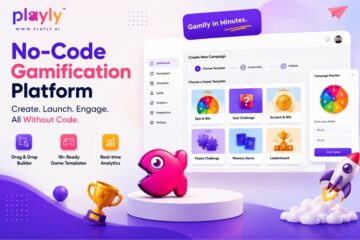
Most teams eventually realize these interactive layers don’t have to be complex or resource-heavy to build. Platforms like Playly.ai make building and adapting these experiences a seamless part of how you design and deliver engagement activities. For the broader strategy behind this shift, see our guide to Gamification for Business.
Ready to build one? Get started with Playly.ai
FAQs: Gamification for Employee Engagement
Gamification improves engagement by giving employees something to actively respond to instead of passively consume. It turning static activities like onboarding, training, and feedback into experiences with real interaction and visible progress.
It refers to adding interactive elements to engagement activities so employees can actively participate rather than passively consume information.
HR teams can apply it across onboarding, training, feedback collection, recognition programs, and internal engagement initiatives.
No. It enhances existing initiatives by making them more interactive and engaging, without changing the underlying content or objective.
Common formats include step-based journeys, quick interactions, and progress-driven activities like milestone tracking and knowledge checks.
Playly.ai lets teams build interactive experiences without added complexity, so they can apply the same gamified format across onboarding, training, recognition, and feedback initiatives.
More ideas. Less noise.
Get ideas with actual impact from Playly.ai
1 Comment
15 Best Gamification Platforms for Customer Engagement · September 30, 2026 at 7:52 am
[…] loyalty programs or reward systems. It is being used across lead generation, customer onboarding, employee engagement, events, product education, customer retention, and brand awareness campaigns. As a result, a […]