Gamification has moved beyond being a buzzword – it’s now an essential tactic in modern engagement and conversion strategies. By integrating game mechanics into marketing, sales, training, and HR development (HRD), organizations are creating interactive experiences that not only capture attention but also influence behaviour in measurable ways.
This article explores standard use cases across key functions, while also introducing unconventional yet highly effective examples that demonstrate the untapped potential of gamification.
See gamification in action before you read further.
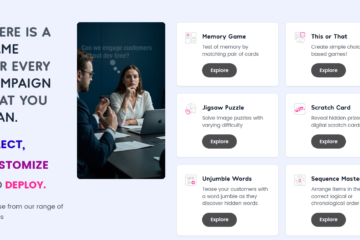
Playly.ai lets you build interactive campaigns quizzes, spin-the-wheel, scratch cards in minutes. No designers, no developers needed.
1. Marketing: Turning Engagement into Action
In marketing, gamification transforms passive audiences into active participants. The most common applications include loyalty programs, points systems, leaderboards, and interactive challenges. Many well-known brands have used mobile apps with progress tracking, badges, and reward milestones to boost engagement and brand loyalty.
But gamification in marketing isn’t limited to apps. One unconventional but highly effective tactic is play-based data collection. Instead of long forms, companies can use short, fun games to gather customer information. For example, a skincare brand might create a “Glow Quiz” that helps users find the right products while collecting age, skin type, and preference data ─ all without the friction of a standard survey. Because customers feel like they’re playing rather than giving away information, they are more likely to engage.
Build your own Glow Quiz in 5 minutes
Collect customer preferences, recommend products, and grow your email list all from one interactive quiz. No code. No friction.
2. Retail and On-Ground Promotions: Capturing the Captive Audience
Physical spaces present huge gamification opportunities, especially where customers are in a waiting or idle state. A classic use case is in-store spin-the-wheel promotions or instant-win scratch cards at checkout counters. These gamified experiences generate excitement and immediate purchase incentives.
Now imagine this scenario: you’re in a multiplex lounge waiting for your movie. A digital display invites you to scan a QR code and play a quick popcorn-themed mobile game. If you score above a certain threshold, you instantly get a 20% discount coupon for popcorn at the snack counter. It’s simple, fun, and highly contextual as people are more likely to buy snacks right before a movie, and the game creates a playful bridge to that purchase.
Such approaches convert downtime into revenue opportunities, turning passive wait time into active engagement.
Launch a spin-the-wheel promo for your store today
Collect customer preferences, recommend products, and grow your email list all from one interactive quiz. No code. No friction.
3. Sales Enablement: Motivating Sales Teams
Sales teams thrive on competition, recognition, and rewards ─ making gamification a perfect fit. Standard approaches include sales leaderboards, badges for hitting targets, and team competitions tied to incentives. CRM platforms often integrate gamified dashboards where reps can track their progress against peers in real time.
Gamification can also boost lead follow-up rates. For instance, a sales organization might create a “Deal Hunt” challenge, where closing deals in specific product categories earns extra points toward monthly prizes. The visible progress indicators motivate consistent action, not just end-of-month rushes.
But gamification doesn’t have to be confined to office environments. Consider bus or flight passengers ─ many of whom are business travelers. A company could partner with transportation providers to run mobile challenges during journeys, offering gift vouchers or special offers for engaging with their brand mid-trip. This approach puts your brand in front of a captive audience during downtime, increasing the likelihood of recall and action later.
Motivate your sales team with a gamified leader board
Run Deal Hunt challenges, reward top performers, and keep your pipeline moving all without a CRM add-on. Set up in under 10 minutes.
4. Training & eLearning: Making Knowledge Retention Fun
One of the earliest corporate uses of gamification was in training. Whether for compliance modules, product education, or leadership development, gamification increases completion rates and retention. Common tactics include:
- Progress bars that show how much of the training is complete.
- Points and badges for completing modules or quizzes.
- Scenario-based simulations where learners must make decisions in a safe, virtual environment.
The power of gamification here lies in instant feedback as learners can immediately see the consequences of their choices, making the experience more memorable.
A non-traditional application could take this even further in customer education. Imagine a restaurant launching a new cuisine. While customers wait for their orders, table tents with QR codes invite them to play a short, cuisine-themed game. Winners get a 20% discount on the new dish. Not only do customers learn about the new item, but many will try it simply because they’ve “earned” it, turning a marketing goal into a customer experience win.
5. HR Development: Boosting Employee Engagement
HR departments use gamification to engage employees in activities like onboarding, wellness programs, and skills development. Leaderboards for wellness steps walked, peer-to-peer recognition badges, and milestone celebrations in HR portals are now standard.
For onboarding, gamification can help new employees explore company policies, meet team members, and complete orientation tasks in a more interactive way. For example, a “company quest” might have them “unlock” different departments by completing small challenges.
And gamification can also support employer branding ─ imagine hosting public, open challenges related to your company’s values or sustainability goals, with prizes for participation. These initiatives attract talent while engaging current employees in meaningful ways.
Your audience wants to achieve, compete, and have fun. Give them a reason to engage.
Playly.ai makes it easy to tap into what drives human behavior and turn it into real business results. Create your first gamified campaign for free.
6. Events & Customer Experience: Beyond the Obvious
Events ─ whether virtual or physical are prime spaces for gamification. In virtual conferences, points can be awarded for attending sessions, visiting booths, or interacting with sponsors. In physical expos, treasure-hunt-style games encourage attendees to explore all stalls and help companies to collect data of the prospects.
But one overlooked opportunity is using gamification for instant conversions in leisure settings. Consider the earlier popcorn example in multiplexes. Now extend that thinking to airports or bus terminals. Travelers scanning a QR code could play a quick puzzle or trivia game themed around a partner brand. Winners instantly receive discount codes they can redeem at terminal stores or partner e-commerce sites. This method works because travelers are often in a “spending mindset” during trips, and the game is a low-effort gateway to purchase.
The Psychology Behind These Use Cases
Gamification works because it taps into key human motivators:
- Achievement: People love reaching milestones and being recognized.
- Competition: Seeing how one stacks up against others drives extra effort.
- Curiosity: The promise of a reward keeps users exploring.
- Fun: Entertainment lowers resistance to engagement, even in transactional contexts.
By combining these drivers with contextual relevance, such as targeting people during idle moments in a theatre, restaurant, or transit ─ brands can turn fleeting opportunities into measurable results.
Turn your next campaign into a game
Playly.ai helps marketers, HR teams, and sales leaders create interactive experiences that people actually want to engage with. Start free.
Final Thoughts
Gamification is not about making everything a game; it’s about strategically using game elements to create engagement, motivate action, and drive conversion. Conventional use cases in marketing, sales, training, and HRD have already proven their worth. But the real potential lies in innovative, situational applications ─ whether it’s a game that collects valuable data without feeling like a form, or an interactive promotion that turns a waiting customer into an instant buyer.
As technology evolves and audiences grow more accustomed to interactive experiences, brands that embrace both standard and creative gamification use cases will stand out ─ not just for being playful, but for being effective.
Sign up for our newsletter for innovation in marketing and other areas of business.
More ideas. Less noise.
Get ideas with actual impact from Playly.ai
0 Comments