Gamification is no longer just a buzzword – it’s now a proven engagement and conversion strategy. By adding light, interactive elements like quizzes, polls, spin-the-wheel, and progress trackers into everyday customer and employee experiences, brands can capture attention, motivate action, and drive measurable results.
In this article, we’ll explore both standard uses and industry-specific examples of how Playly-style gamification mechanics can be applied across marketing, sales, training, HR, and beyond.
1. Marketing – From Attention to Action
Common Tactics: Points systems, leaderboards, polls, and quiz challenges.
Example: A skincare brand runs a “Glow Quiz” inside its app. Customers answer 5 quick questions to find their ideal product. At the end, they get a personalized recommendation plus a discount code valid for 24 hours.
Why It Works: Quick, mobile-friendly interaction that collects customer preferences without feeling like a survey, while driving same-day purchases.
See the full library of ready-to-launch game formats you can build without code.
2. Retail – Making In-Store Fun
Common Tactics: Spin-the-wheel, instant win scratch cards, barcode scan challenges.
Example: A clothing store sets up a “Style Spin” wheel on a tablet at checkout. Every customer gets one spin after purchase for a chance to win coupons, free accessories, or loyalty points.
Why It Works: Encourages immediate redemption and adds a feel-good surprise element at the point of sale.
3. BFSI – Financial Engagement Made Easy
Common Tactics: Daily streaks, progress bars, knowledge quizzes.
Example: A bank launches a “Money Master Streak” game in its mobile app. Customers answer one finance question a day for 7 days. Completing the streak unlocks a free financial consultation or special deposit rate.
Why It Works: Builds habit-forming engagement while positioning the brand as a trusted advisor.
4. NBFC – Turning Applications into a Game
Common Tactics: Instant win wheels, progress milestones, reward tiers.
Example: A loan provider integrates a “Spin & Save” game during the loan application process. Applicants spin a wheel to reveal their bonus ─ reduced processing fees, cashback, or interest discounts.
Why It Works: Makes the application process less transactional and increases completion rates.
5. Hospitality – Driving On-Property Spend
Common Tactics: Check-in challenges, digital stamp cards, point trackers.
Example: A hotel runs a “Resort Explorer Challenge” where guests scan QR codes at the pool, spa, and restaurant to earn points. Points can be redeemed for a free drink or spa discount.
Why It Works: Increases facility usage and ancillary revenue during the stay.
6. Tourism – Guiding the Experience
Common Tactics: Location-based quizzes, photo challenges, interactive maps.
Example: A city tourism board launches a “Landmark Quest” app. Visitors answer short trivia questions at each site they visit, earning points for discounts at local cafés and shops.
Why It Works: Keeps tourists exploring while promoting partner businesses.
See how a no-code spin-the-wheel would look for your brand
7. Transport – Engaging Commuters
Common Tactics: Travel streaks, route check-ins, instant win.
Example: A metro service introduces a “Ride Rewards” streak tracker. Passengers who travel for 5 consecutive weekdays unlock a game and on winning it unlocks a free weekend ride.
Why It Works: Encourages regular use and strengthens commuter loyalty.
8. Travel – Enhancing the Journey
Common Tactics: Destination quizzes, leaderboard challenges, in-app scratch cards.
Example: An airline runs an “Arrival Trivia” quiz on its app during the flight. Correct answers about the destination earn passengers lounge access or extra miles.
Why It Works: Keeps passengers engaged mid-journey while promoting loyalty programs.
9. Health & Fitness – Building Healthy Habits
Common Tactics: Step trackers, habit streaks, mini challenges.
Example: A gym app runs a “7-Day Fitness Streak” where members log their workouts daily. Completing the streak unlocks a free protein shake or guest pass.
Why It Works: Encourages consistent attendance and upsells memberships or services.
10. eCommerce – Driving Purchases
Common Tactics: Countdown games, cart challenges, spin-the-wheel.
Example: An online fashion store hosts a “Cart Challenge” where customers adding three or more items to their cart within 10 minutes get a mystery coupon to play a game. The winner of the game gets a 20% discount.
Why It Works: Creates urgency and boosts average order value.
11. SaaS /Tech – Product Familiarity
Common Tactics: Demo quizzes, bug hunt games, points for tutorials.
Example: A SaaS company adds a “Feature Quest” where trial users explore three features in the product and answer quick questions. Completion gives them 10% off the subscription.
Why It Works: Encourages product exploration and higher conversion from trial to paid.
12. Entertainment – Encouraging Watch Time
Common Tactics: Watch streaks, episode quizzes, badge systems.
Example: An OTT platform launches a “Weekend Binge Badge” challenge ─ watch 3 recommended shows over the weekend and answer questions in a game to unlock early access to next week’s releases.
Why It Works: Boosts watch time and retention rates.
13. Education & Training – Boosting Learning Completion
Common Tactics: Lesson streaks, quiz challenges, progress bars, certificate unlocks.
Example: An online learning platform runs a “7-Day Learning Streak” challenge. Learners who complete at least one lesson or a gamified quiz daily for seven days receive a digital badge, a downloadable certificate, and a 20% discount on their next course.
Why It Works: Encourages consistent learning, increases course completion rates, and promotes upsell to additional courses while giving learners a sense of achievement.
14. Food & Restaurant – Turning Repeat Visits into Habits
Common Tactics: Digital stamp cards, spin-to-win at checkout, streak-based loyalty, menu-item quizzes.
Example: A quick-service restaurant chain runs a “Lucky Bite Spin” at checkout — every order over a set amount earns a spin for a free side, drink upgrade, or loyalty points. A “Weekly Regular Streak” rewards customers who order 3 times in a week with a free item on their next visit..
Why It Works: Restaurants live on repeat-visit frequency, and a small, instant reward at the point of purchase is a low-cost way to nudge a one-time customer into a habitual one especially effective for QSR and delivery-app-driven brands competing purely on convenience.
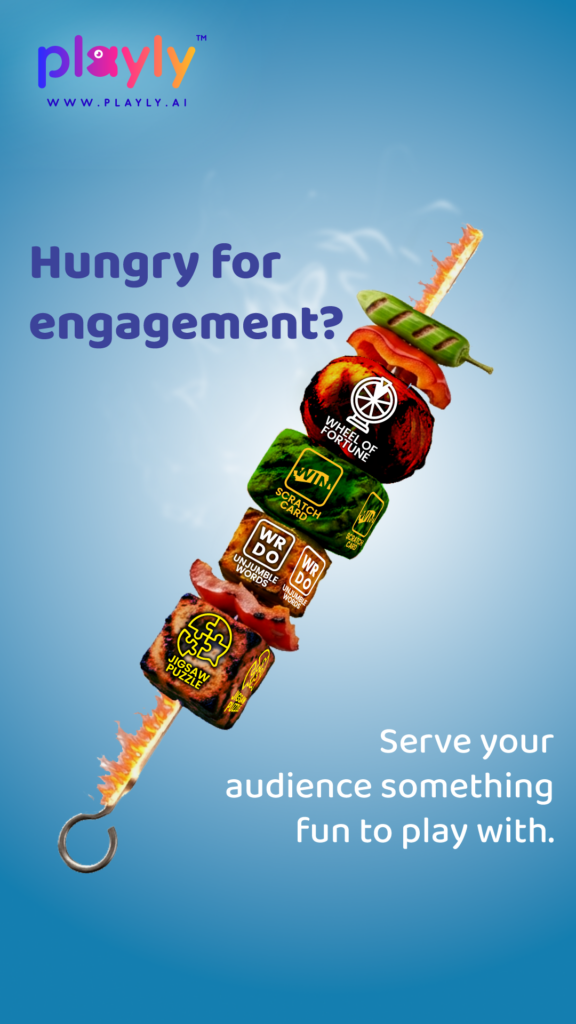
15. HR & Employee Engagement – Making Internal Programs Stick
Common Tactics: Onboarding quizzes, peer-recognition points, wellness streaks, internal leaderboards.
Example: A company runs a “30-Day Onboarding Quest” for new hires completing each week’s training modules and a short quiz unlocks a badge, and finishing all four weeks earns a small perk (extra leave day, swag, or a lunch voucher with their manager).
Why It Works: Turns compliance-heavy onboarding into something new hires actually finish, and gives HR a built-in completion metric instead of chasing sign-offs manually
16. Real Estate – Turning Browsing into Booked Visits
Common Tactics: Site-visit spin wheels, virtual tour scavenger hunts, milestone-based discount unlocks.
Example: A property developer runs a “Spin to Unlock” wheel for anyone who books a site visit through their landing page. Visitors spin after confirming a slot to reveal a bonus free legal consultation, waived processing fee, or a furnishing voucher redeemable only if they show up.
Why It Works: Site visits are the highest-friction, highest-value step in real estate. Gamifying the booking moment increases show-up rates instead of just lead form fills, and works especially well for APAC markets where broker-led, incentive-driven decisions are common.
Ready to gamify your next campaign?
Why Playly-Style Gamification Works?
These light, accessible formats tap into core motivators:
- Achievement: Completing streaks and earning badges.
- Competition: Leaderboards and scoring challenges.
- Curiosity: Mystery prizes and random rewards.
- Fun: Low-effort entertainment with instant gratification.
Final Thoughts
Gamification doesn’t need to be complex or over-the-top to work. By using simple, mobile-friendly game formats like quizzes, streaks, spin-the-wheel, and progress trackers – and tailoring them to industry goals, brands can boost engagement and conversion without overwhelming the user.
The secret is to keep interactions short, rewarding, and relevant to the moment. Whether it’s a spin after checkout, a daily streak in an app, or a quick trivia at a landmark, these small “games” can make a big business impact.
Frequently Asked Questions About Gamification Use Cases by Industry
Retail, BFSI/NBFC, hospitality, travel, and education currently see the heaviest gamification adoption, because each has a natural moment checkout, an app session, a stay, a lesson where a short interactive nudge fits without disrupting the core experience.
A common retail example is a spin-the-wheel offered at checkout, where every purchase earns a customer one spin for a coupon, free item, or loyalty points.
Both, gamification increases engagement first (time on page, participation), but the reward structure (discount codes, unlocked offers) is what converts that attention into a same-session purchase or signup.
Yes, no-code platforms like Playly let you build and embed spin-the-wheel, quiz, and streak-style games without writing code, using pre-built templates you customize and publish directly.
B2C gamification (retail, eCommerce, hospitality) typically rewards a single action like a purchase or check-in, while B2B and employee-facing gamification (training, HR, sales) uses streaks and progress tracking to build a habit over days or weeks.
Match the mechanic to the moment: use instant-win formats (wheels, scratch cards) at a single transaction point like checkout, and use streaks or progress bars when you want to build a repeated habit like daily app opens or course completion.
More ideas. Less noise.
Get ideas with actual impact from Playly.ai
2 Comments
Gamification for Business: The Complete Guide · August 28, 2026 at 9:37 am
[…] like wheels and scratch cards, while SaaS and education lean hardest on progress and streaks. Sixteen concrete, industry-specific examples of these mechanics in action are broken down here, covering everything from BFSI and real estate to hospitality and […]
The Gamification Framework: Match Mechanics to Funnel Stage · August 28, 2026 at 1:52 pm
[…] “engaging” it’s engaging for a specific job. Every industry example in our use-case library maps onto one of these five rows worth cross-checking which stage you’re solving for before […]